
Ariane De Lannoy represents SALDRU at the Second World Summit for Social Development
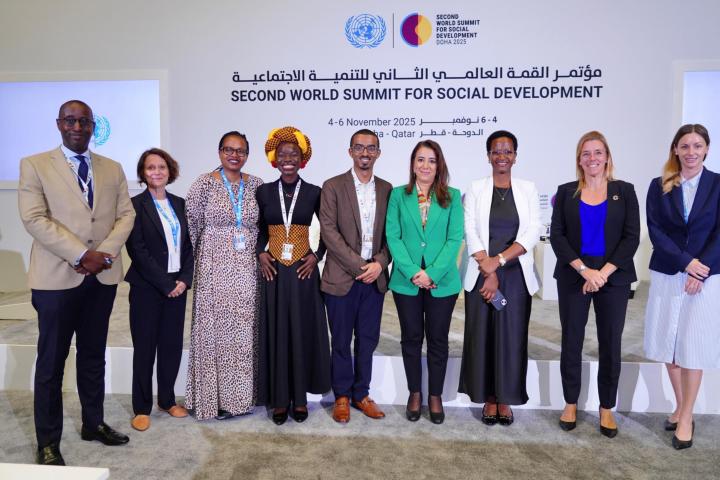
Image: Participants on the panel discussing Commitments on Youth Engagement. Credit: UNECA.
In September Associate Professor Ariane De Lannoy (SALDRU, UCT) attended the United Nations Economic Commission for Africa (UNECA)’s preparatory consultation in Addis Ababa. This expert meeting was part of the African process preparing inputs for the Second World Summit for Social Development (WSSD2), to be held in Doha from the 4th to the 6th of November. The preparatory expert meeting in Addis brought together African academics, practitioners and policy-makers to assess progress on poverty eradication, decent work and social integration (with a special focus on youth). Outcomes from the consultation helped shape Africa’s collective input to the WSSD2 process.
At the Second World Summit for Social Development itself, Prof. De Lannoy contributed to UNECA-led panels on youth participation and youth unemployment, drawing on her research on youth socio-economic exclusion, well-being, and the implementation of a comprehensive approach to support young people who are not in employment, education or training (NEET) onto pathways to sustainable livelihoods. Her contributions amplified South African evidence and youth-voice perspectives in high-level discussions.
The WSSD2 saw the adoption of the Doha Political Declaration - an inter-governmentally negotiated outcome that was agreed by consensus. The Declaration reaffirmed the original 1995 Copenhagen Declaration on Social Development and Programme of Action, but updated the agenda by placing renewed emphasis on poverty eradication in all its dimensions; full and productive employment and decent work for all; and social inclusion - including specific commitments on digital transformation, climate-resilient social protection systems, and disaggregated data to leave no one behind. The Summit provided a major opportunity to reinvigorate and demonstrate global political will around the social dimension of sustainable development. It signalled a deliberate shift from diagnosing gaps to concrete collective action through stronger multilateral cooperation, thus anchoring social justice more firmly in the 2030 Agenda era.
“The adoption of the Declaration marks a shared commitment by governments to tackle poverty, create decent jobs, advance equality and protect human rights, underlining that social development is not only a moral imperative, but also essential for peace, stability and sustainable growth.” (www.un.org)
More information on the Declaration and the Summit is available here.